
FomoTraders earns a referral reward from Fomo, so weigh this accordingly. Coinbase facts come from its pricing and fees disclosures, its Coinbase Advanced fee and product pages and its DEX trading page, checked on 18 October 2026. Coinbase notes that its fees don’t apply in all regions.
The short version
Fomo is built on-chain. Your wallet is yours, every token on its eight chains is tradable, and the app is built around a live feed of real trades. You pay published rates: 0.45% a trade with a referral code, and 0.05% on select major tokens.
Coinbase is an exchange: you hold a Coinbase account, Coinbase holds your coins, and you trade the assets it lists, with fees worked out per order. It has also added DEX trading of Base and Solana tokens to its app.
Fomo vs Coinbase at a glance
| Feature | Fomo | Coinbase |
|---|---|---|
| What it is | Non-custodial social trading app | Crypto exchange, with Coinbase Advanced for active traders and DEX trading for on-chain tokens |
| Trading cost | 0.50%, or 0.45% with a referral code; 0.05% on select major tokens; route-based on Solana | Simple trades: a spread plus a Coinbase fee worked out per order. DEX trades: a Coinbase fee plus a service fee. Advanced: maker and taker fees by tier, no spread |
| Limit orders | Not documented for spot; available on perps | Yes. Simple limit orders carry a 1% execution fee on top of other fees |
| New tokens | Tokens on eight chains, including new launches, with risk labels | Base and Solana tokens through DEX trading, usually within hours of creation; known scams filtered out |
| Custody | Your own wallet; keys split into shares and exportable | Coinbase holds listed assets; DEX assets sit in a self-custody wallet you create |
| Funding | Debit card, Apple Pay, USDC or Pay with Coinbase, depending on your country | Payment methods vary by region; fees depend on the method |
| Staking | Not documented | Yes, with a standard 35% commission on rewards |
| Derivatives | Perps via Hyperliquid and trade.xyz, not for US persons | On Coinbase Advanced, up to 10x for eligible users |
| Social | Live feed of real trades, theses, leaderboard, follows | Not covered by the Coinbase pages we compared |
What a trade costs
Coinbase doesn’t publish a single percentage for everyday buys. Its disclosures say the Coinbase fee “can be influenced by factors such as your chosen payment method, order size, market conditions, jurisdictional location, asset, and other costs.” On top of that, simple trades include a spread in the quoted price, which Coinbase may keep part of. You see the total in the order preview before you confirm.
Some Coinbase costs are fixed and published. Here they are next to Fomo’s:
- Fomo, select major tokens$0.50
- Fomo with code theses$4.50
- Fomo, no code$5.00
- Coinbase simple limit order: execution fee alone$10.00Plus the Coinbase fee, which Coinbase says may be 1.875% depending on payment method.
Coinbase's everyday market buys aren't shown because their spread and fee are calculated per order. Network fees apply where relevant; Fomo covers Solana's.
A few more details from Coinbase’s disclosures:
- Coinbase One, a paid subscription, removes trading fees with limitations. It doesn’t remove the spread, the 1% limit-order fee or the DEX service fee.
- Coinbase Advanced has no spread: you trade on the order book and pay a maker or taker fee by tier, and Coinbase says maker fees can be as low as 0.0%. It’s built for experienced traders.
- Coinbase has no payment-for-order-flow relationships with market makers, it says. Primary-balance trades go through Coinbase Exchange’s order book or auctions.
Trading new tokens: Coinbase DEX vs Fomo
This is where the two now compete directly.
Coinbase DEX trading lets you trade tokens on Base and Solana “moments after their launch,” with a Launchpad feed of new tokens, filters by market cap, volume, holders and liquidity, and risk signals from third parties. Coinbase says new on-chain tokens usually become tradable within hours, and tokens flagged as scams by a trusted third party are filtered out. To use it you create a self-custody wallet, and it isn’t available everywhere. Fees are a Coinbase fee plus a DEX service fee; Coinbase One members skip the Coinbase fee but still pay the service fee.
Fomo trades tokens on eight chains: Solana, Base, BNB Chain, Monad, Ethereum, Robinhood Chain, Arc and Elysium. Every token has a status: verified by Fomo’s team, unverified (with a caution popup), or labelled with a warning when it looks risky. You pay 0.50%, or 0.45% with a referral code, and Fomo covers Solana network costs.
Coinbase’s DEX trading covers Base and Solana. Fomo adds BNB Chain, Monad, Ethereum, Robinhood Chain, Arc and Elysium, all from one cash balance.
You can filter Fomo’s token lists by network, as Fomo’s own clip shows, and every chain uses the same balance, with no bridging.
Custody: who holds your crypto
On Coinbase, listed assets in your primary balance are held for you. Coinbase describes itself as the largest publicly traded crypto exchange and says customer assets are held 1:1. DEX assets are different: Coinbase doesn’t review or hold them, and they live in your self-custody wallet.
On Fomo, everything is in your own non-custodial wallet. You sign in with Apple or Google with no seed phrase, your key is split into shares, and you can export it. Our safety guide explains the trade-offs.
Where Fomo is stronger
- A fee you can read in advance. 0.50%, or 0.45% with a referral code, and 0.05% on select majors.
- More chains for new tokens. Eight chains with one balance, against Base and Solana for Coinbase’s DEX trading.
- Social context. Trades show in a live feed with the trader’s profit and often a written thesis, and a leaderboard ranks traders by real profit.
- Self-custody by default, with exportable keys.
- Perps outside the US with up to 40x on BTC. See our perps guide.
Where Coinbase is stronger
- A regulated exchange account with a curated list of reviewed assets, held for you.
- Pro trading. Coinbase Advanced lists 352 spot pairs and derivatives on crypto, commodities and stocks, with APIs.
- Order types. Limit orders on simple trades, and full order-book trading on Advanced.
- Staking, plus extras such as the Coinbase Card.
- Brand familiarity. If you already use Coinbase, there’s nothing new to set up for listed coins.
One practical link between them: Fomo’s Deposit screen has an Exchanges and apps option that opens Pay with Coinbase, so you can fund Fomo straight from a Coinbase balance. You only need a Coinbase account for that option; debit card and Apple Pay deposits work without one.
What trading on Fomo looks like
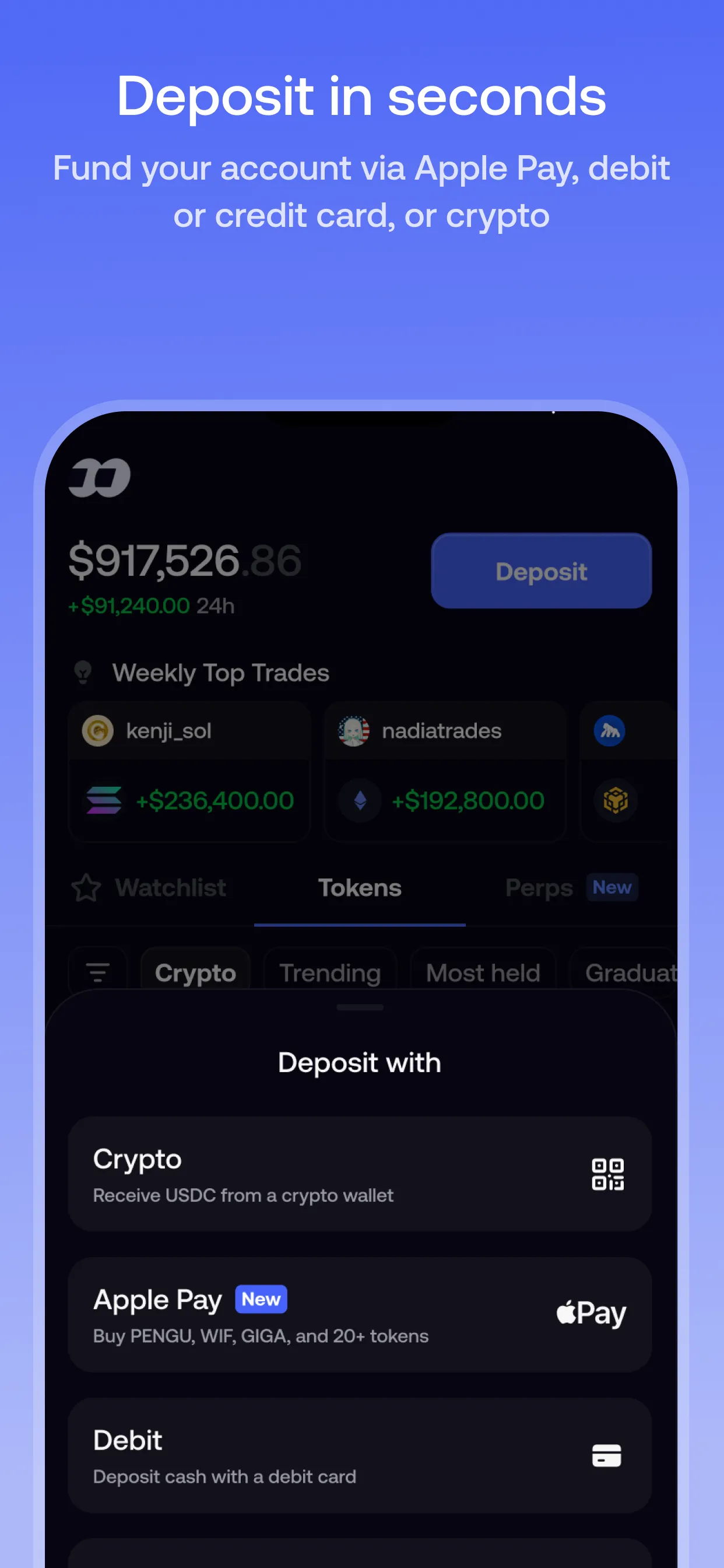
DepositCard or Apple Pay where available, Pay with Coinbase from a Coinbase balance, or USDC from any wallet. 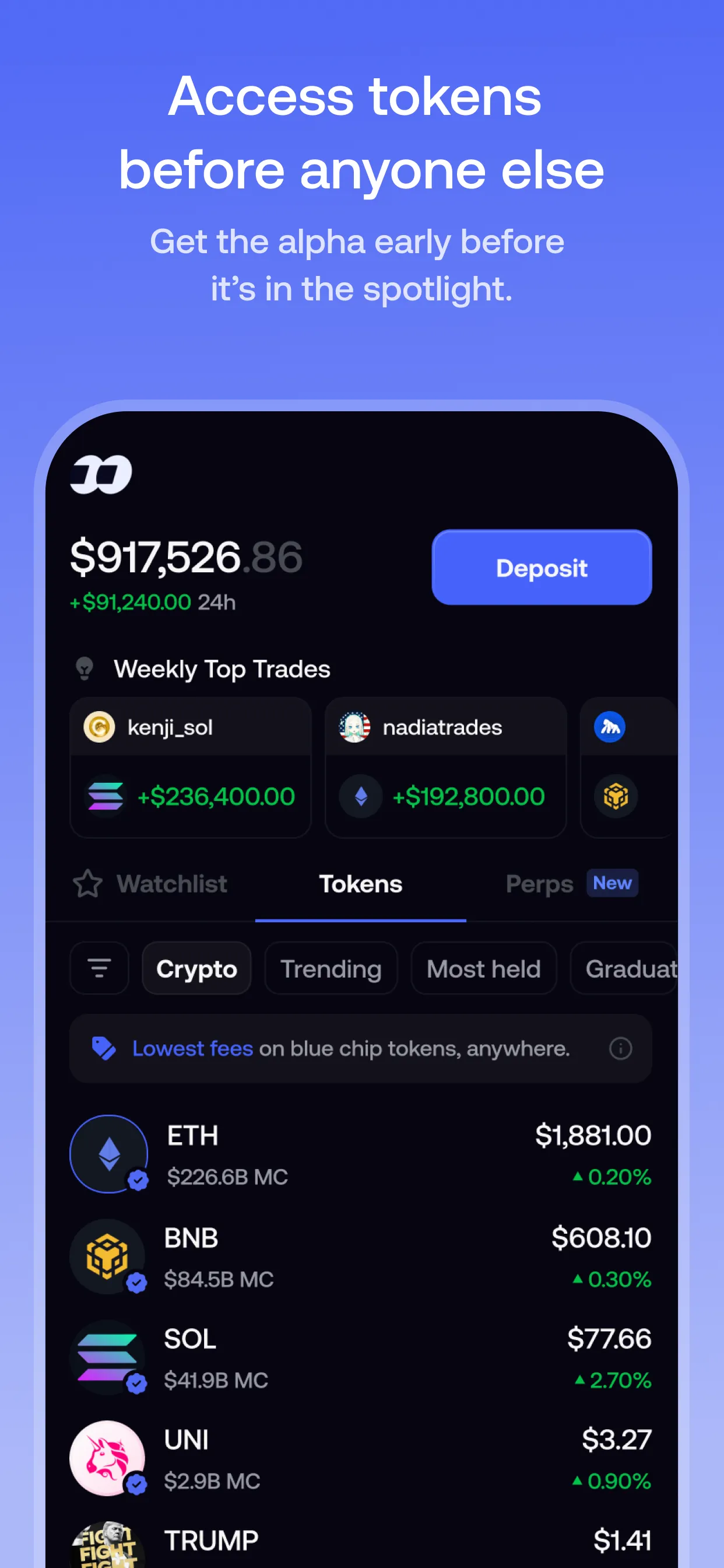
Find tokensLists for Crypto, Trending, Most held, Graduated, Bonding, Gainers and Community. 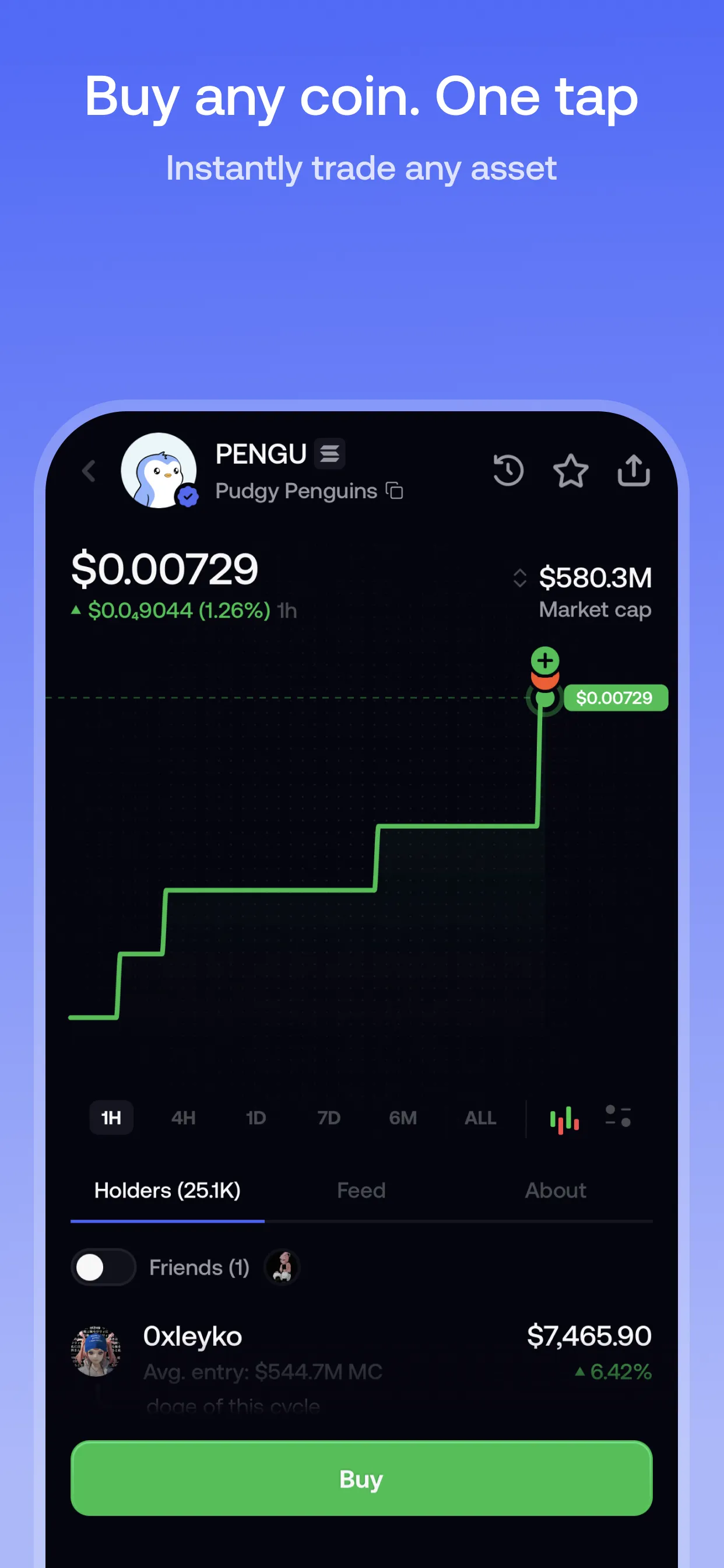
ResearchChart, holders, labels and other traders' theses on each token page. 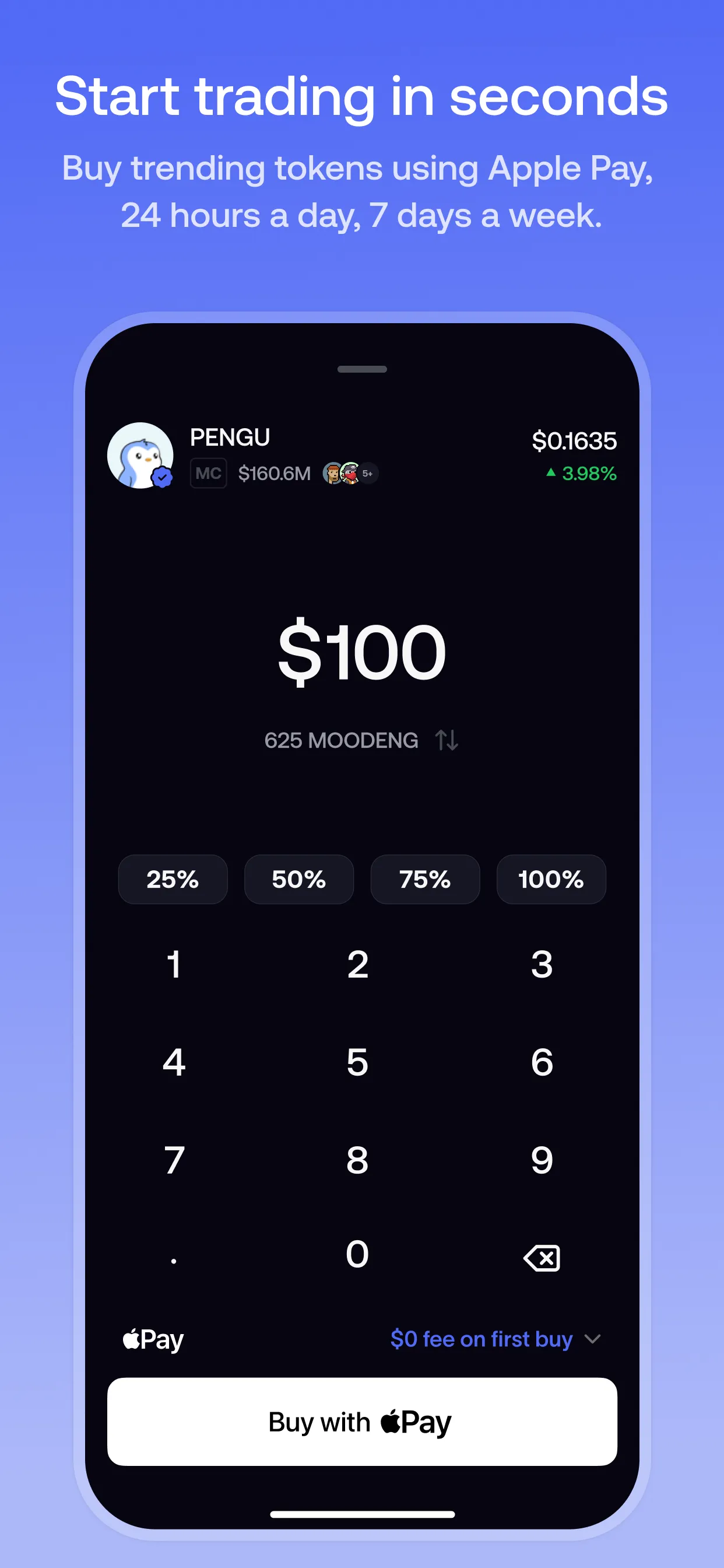
BuyOne screen, one amount. With a referral code the standard fee is 0.45%. 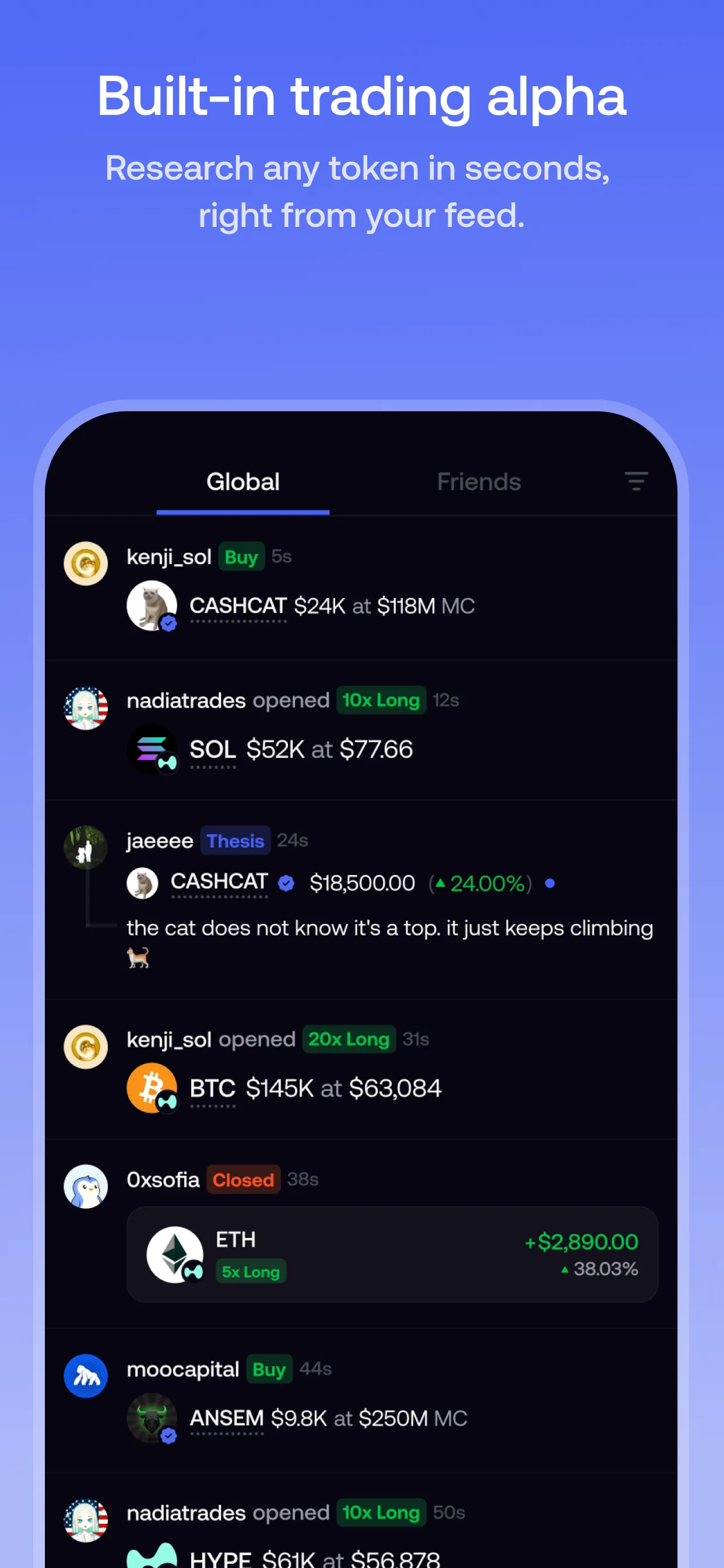
Follow the actionTrades from across Fomo, live, with the trader's profit.
Which should you use?
Fomo vs Coinbase questions
What fee does Coinbase charge to buy crypto?
For simple trades, Coinbase includes a spread in the price and charges a Coinbase fee that depends on your payment method, order size, market conditions, location and asset. You see the total before confirming. Simple limit orders add a 1% execution fee. Coinbase Advanced uses maker and taker fees instead, with no spread.
Can I buy new memecoins on Coinbase?
In many regions, yes, through Coinbase's DEX trading for Base and Solana tokens, using a self-custody wallet. Coinbase says new tokens usually become tradable within hours. DEX trades can carry a service fee on top of the Coinbase fee.
Is Fomo cheaper than Coinbase?
Fomo publishes a flat 0.50%, or 0.45% with a referral code, and 0.05% on select major tokens. Coinbase's everyday fee is calculated per order, so a single comparison isn't possible; check the preview screen on both before you trade. On Solana, Fomo has minimums on trades under 190 USDC.
Do I need a Coinbase account to use Fomo?
No. You only need one if you choose Pay with Coinbase, under Exchanges and apps on Fomo's Deposit screen, to fund from a Coinbase balance. Debit card, Apple Pay and USDC deposits work without one.
Can I send USDC from Coinbase to Fomo?
Yes. Fomo accepts USDC deposits on Solana, Base, BNB Chain, Monad and Ethereum. Pick the same network on both sides, and Coinbase will charge a network fee for the send.
Is my crypto safer on Coinbase or Fomo?
They protect you in different ways. Coinbase holds listed assets for you, so you rely on Coinbase. Fomo is non-custodial, so you control your wallet but also carry the responsibility. Neither protects you from a token losing value.
What changed on this page
- : Corrected the fee wording: a referral code takes Fomo's standard 0.50% fee to 0.45%, and the 0.05% major-token rate and small Solana trade fees stay as they are.
- : Fomo now supports eight chains and accepts a code until your first trade.
Sources (18)
- Trading fees on fomo · Fomo Help Center, updated 9 Nov 2026
- How referral codes and fee discounts work · Fomo Help Center, updated 10 Nov 2026
- Supported chains · Fomo Help Center, updated 9 Nov 2026
- Where is fomo available · Fomo Help Center, updated 3 Nov 2026
- How to deposit funds · Fomo Help Center, updated 3 Nov 2026
- Buying a token with Apple Pay · Fomo Help Center, updated 3 Nov 2026
- Do I need a Coinbase account to deposit · Fomo Help Center, updated 3 Nov 2026
- How fomo keeps your crypto secure · Fomo Help Center, updated 3 Nov 2026
- What is a private key and how to protect it · Fomo Help Center, updated 9 Nov 2026
- The social feed · Fomo Help Center, updated 23 Apr 2026
- Posting a thesis · Fomo Help Center, updated 8 Oct 2026
- Leaderboard · Fomo Help Center, updated 8 Oct 2026
- How tokens are labeled and verified on fomo · Fomo Help Center, updated 19 May 2026
- What Perpetual Futures Are on fomo · Fomo Help Center, updated 12 Nov 2026
- Fees · help.coinbase.com
- Advanced trade fees · help.coinbase.com
- Dex · coinbase.com
- Advanced trade · coinbase.com
Checked against these sources on 18 Oct 2026. Apps change their features, fees and policies; the live app is the final word.