
FomoTraders earns a referral reward from Fomo, so weigh this accordingly. Robinhood facts come from its crypto page, its Robinhood Crypto fee schedule and its Social, Wallet and Chain pages, checked on 18 October 2026. Robinhood’s products vary by country; we describe its US crypto offering unless we say otherwise.
Two very different ways to own crypto
On Fomo, you trade directly on blockchains. Any token on Fomo’s eight chains is a search away, including ones launched an hour ago, and the keys to your wallet are yours. Every trade shows up in a live social feed, so you can see what other traders are buying and why.
On Robinhood, you buy crypto the way you buy a stock. You pick from the coins Robinhood has chosen to list, Robinhood fills the order, and Robinhood holds the coins for you.
Fomo vs Robinhood at a glance
| Feature | Fomo | Robinhood (US crypto) |
|---|---|---|
| What it is | Non-custodial social trading app | Brokerage app; crypto through Robinhood Crypto, LLC |
| Who can sign up | Available in most countries, with exclusions in Fomo's terms; Apple or Google sign-in | 18 or older, a Social Security number, a US residential address and US citizenship, permanent residence or a valid visa |
| What you can buy | Tokens on Solana, Base, BNB Chain, Monad, Ethereum, Robinhood Chain, Arc and Elysium, including new launches; perps outside the US | A listed selection of popular coins and stablecoins, such as BTC, ETH, DOGE, SHIB, AVAX, LTC, UNI, LINK and AAVE |
| Trading cost | 0.50%, or 0.45% with a referral code; 0.05% on select major tokens; route-based on Solana | No commission on default routing; Robinhood receives rebates from market makers. Exchange routing: 0.95% taker, 0.50% maker under Robinhood (US crypto)0,000 of monthly volume |
| Who holds the crypto | You: non-custodial wallet, keys split into shares, exportable | Robinhood, mostly in cold storage, with crime insurance; not FDIC insured or SIPC protected |
| Moving crypto out | USDC to a wallet or exchange on eight networks; bank withdrawals for US accounts | No Robinhood fee to send or receive; network fees apply |
| Staking | Not documented | ETH, SOL and ADA, with a 25% commission on rewards |
| Social | Every trade in a live feed, written theses, profit leaderboard | Robinhood Social: a feed, verified P&L and portfolio snapshots you choose to share |
What each one costs
The two charge in different ways, which makes a direct comparison tricky.
Robinhood charges no commission when it sends your order to market makers, its default. It’s paid through volume rebates from those market makers, so the cost sits in the price you’re quoted. Robinhood says it offers one of the lowest crypto costs on average, and that you could get up to 2.2% more crypto than elsewhere, based on quotes from 18 September 2026 that it says were checked by a third party. Orders through Robinhood Legend or its advanced charts go to partner exchanges and pay a fee by volume tier instead.
Fomo charges a published percentage per trade: 0.50%, or 0.45% if you sign up with a referral code. Select major tokens cost 0.05%. On Solana the fee is route-based, with minimums on small trades, and Fomo covers Solana’s network costs.
- Fomo, select major tokens$0.50
- Fomo with code theses$4.50
- Fomo, no code$5.00
- Robinhood exchange routing, maker$5.00
- Robinhood exchange routing, taker$9.50
Robinhood's default market-maker routing charges no commission, so it isn't shown: its cost is in the quoted price. Exchange-routing rates are Robinhood's lowest-volume tier, under $10,000 a month. Network fees are extra where they apply.
The practical takeaway: on Fomo you know the rate before you tap buy: 0.05% on select major tokens, and 0.45% on most other trades with a referral code (small Solana trades have their own fee bands). Robinhood’s default routing has no commission; its revenue comes from market-maker rebates, reflected in the price you’re quoted. And for any token Robinhood doesn’t list, there’s no comparison at all: you can’t buy it on Robinhood.
What you can actually buy
Robinhood lists a selection of established coins and stablecoins. That’s a feature for many people: you’re less likely to stumble into a token that goes to zero overnight. Robinhood also offers a separate self-custody app, Robinhood Wallet, which this comparison doesn’t cover.
Fomo opens up whatever trades on its chains: memecoins, new launches, tokens on Base, BNB Chain and Robinhood Chain. Fomo labels every token: verified tokens have passed a review by its team, unverified ones show a caution popup when you open them, and warning labels flag tokens that look risky or fraudulent, such as contracts that block sells. Those labels help, but they don’t make a new token safe. Most memecoins lose value.
Fomo also offers perpetual futures on crypto, US stocks, indices and commodities, outside the US. Robinhood, of course, sells real US stocks, which Fomo doesn’t. If you want to own shares, Robinhood is the place.
Robinhood Chain, and why Fomo is on it
Robinhood has its own blockchain. Robinhood describes Robinhood Chain as a permissionless Layer 2 for financial services and real-world assets, built on Arbitrum’s technology with 100-millisecond block times. It’s home to Robinhood’s Stock Tokens, which aren’t available in the US.
Fomo trades tokens on Robinhood Chain. You can deposit USDG on Robinhood Chain, which converts into your Fomo cash balance, and withdraw on it too. Fomo’s clip calls it buying “any Robinhood token in seconds.”
Social trading: two different philosophies
Robinhood launched Robinhood Social: a feed where people share trades and charts, track “the politicians, traders, and other market players at the center of the conversation”, post portfolio snapshots and show verified P&L. Crucially, on Robinhood you “choose what you share of your own.”
On Fomo, the feed is the product. Trades on Fomo appear in the feed with the trader’s profit, a leaderboard ranks every trader by real profit, and traders attach written theses to their positions. You can follow anyone and be notified when they trade. Our guide to copying the best traders on Fomo shows how people use that.
Where Fomo is stronger
- Any on-chain token. Memecoins and new launches across eight chains, not just a listed selection.
- You hold the keys. Fomo is non-custodial, and you can export your keys.
- Global sign-up. Available in most countries with an Apple or Google account. Robinhood Crypto in the US requires a Social Security number and US address.
- A social feed built on real trades, with the profit and the reasoning attached.
- Perps on crypto, stocks, indices and commodities outside the US.
Where Robinhood is stronger
- Mainstream coins, no commission. Default routing has no commission on listed coins.
- One account for everything. Crypto next to stocks, options, retirement accounts and more.
- Custody handled for you. Robinhood holds your coins, mostly in cold storage, with crime insurance, and offers 24/7 customer support.
- Real US stocks, which Fomo doesn’t sell.
- Staking on ETH, SOL and ADA.
What trading on Fomo looks like
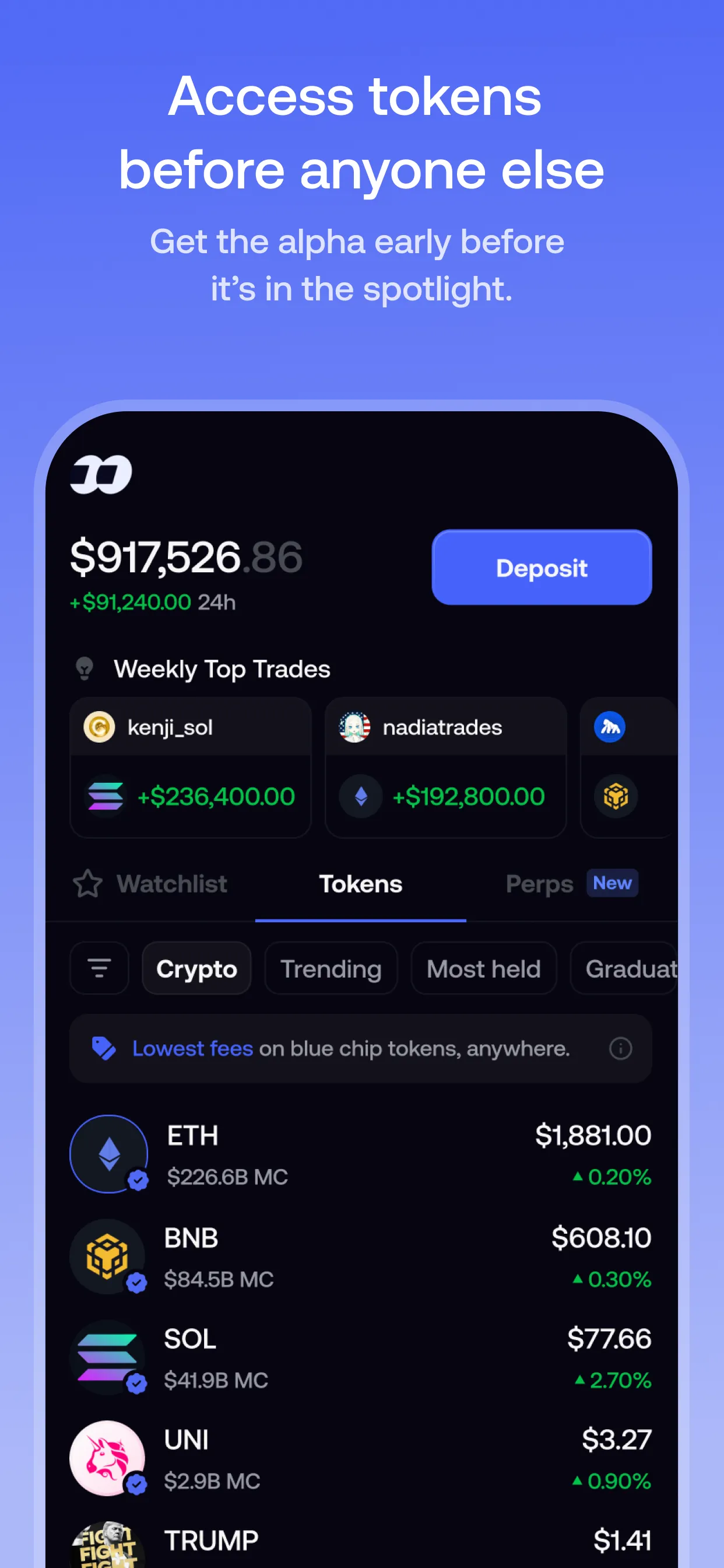
A familiar home screenPortfolio value up top, then lists of tokens: Crypto, Trending, Gainers and more. 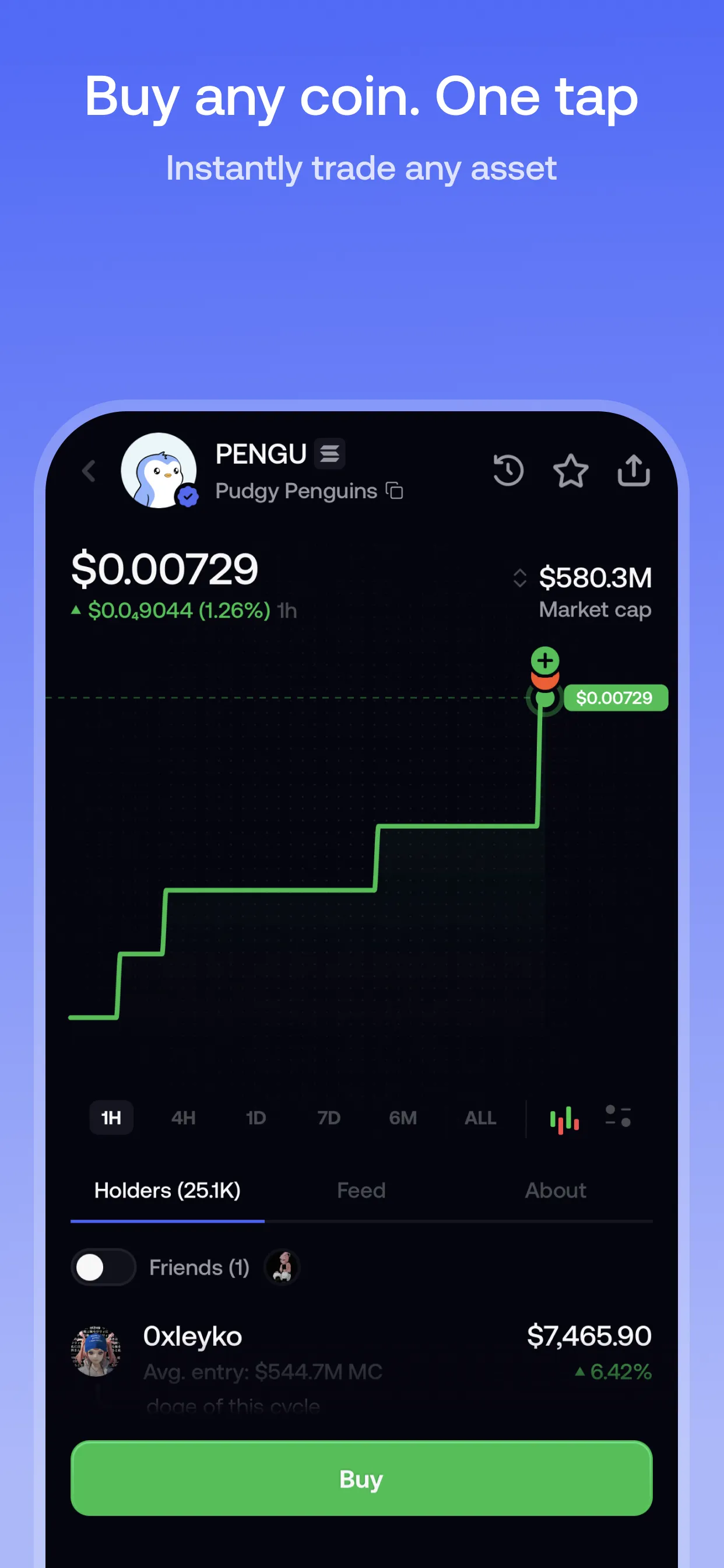
Every token gets a pagePrice chart, holders, and trades and theses from other traders in that token. 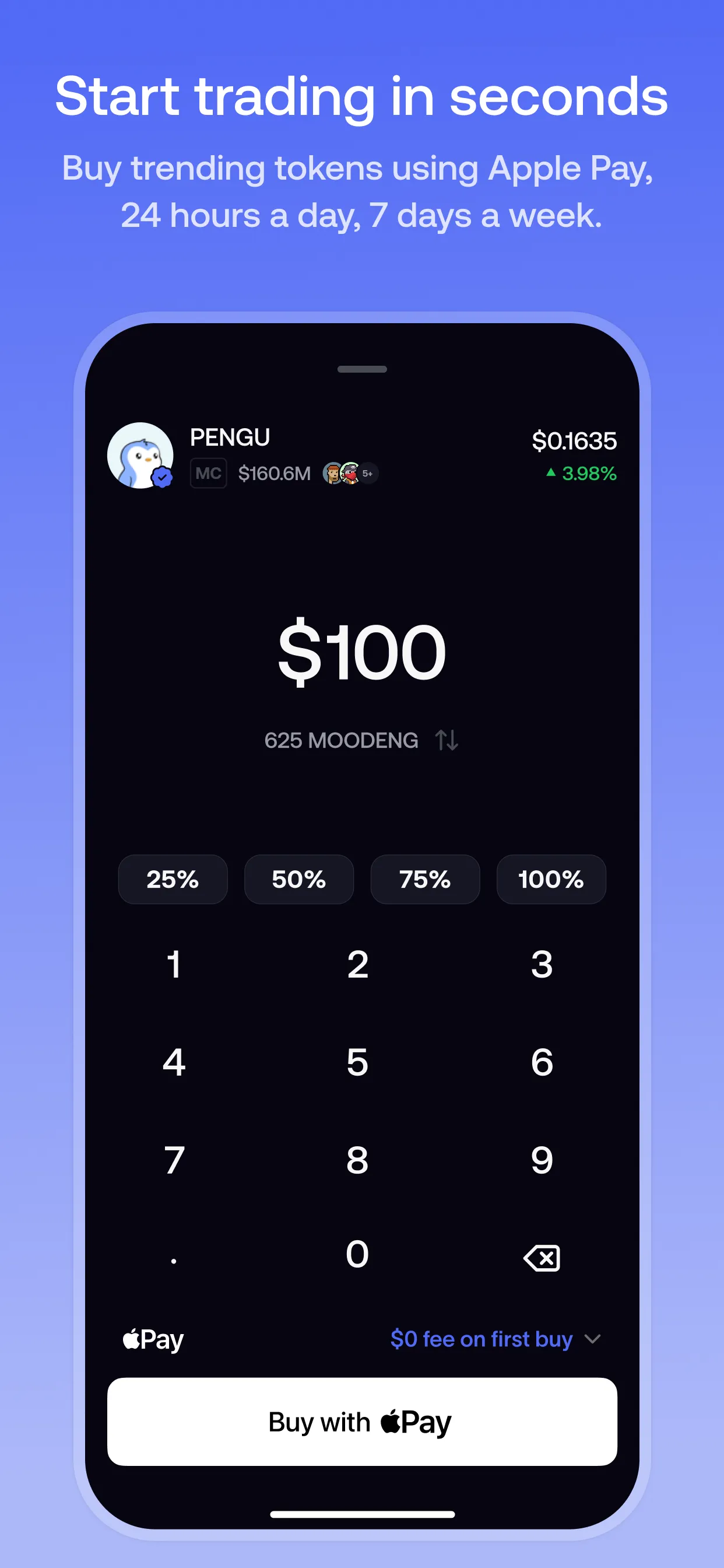
Buy like any appType an amount and confirm. With a referral code, Fomo's standard fee is 0.45% instead of 0.50%. 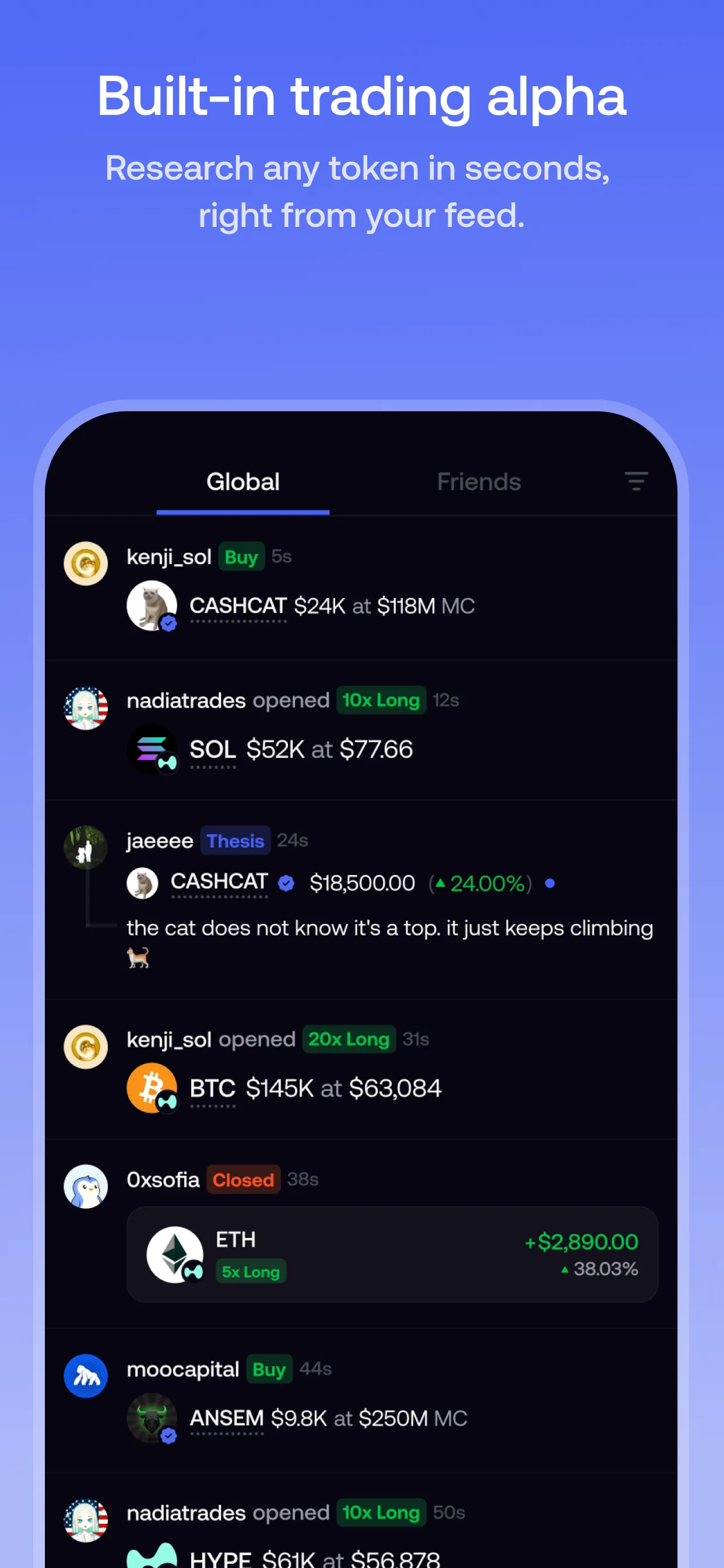
See what others tradeTrades show in a live feed, often with a written thesis. 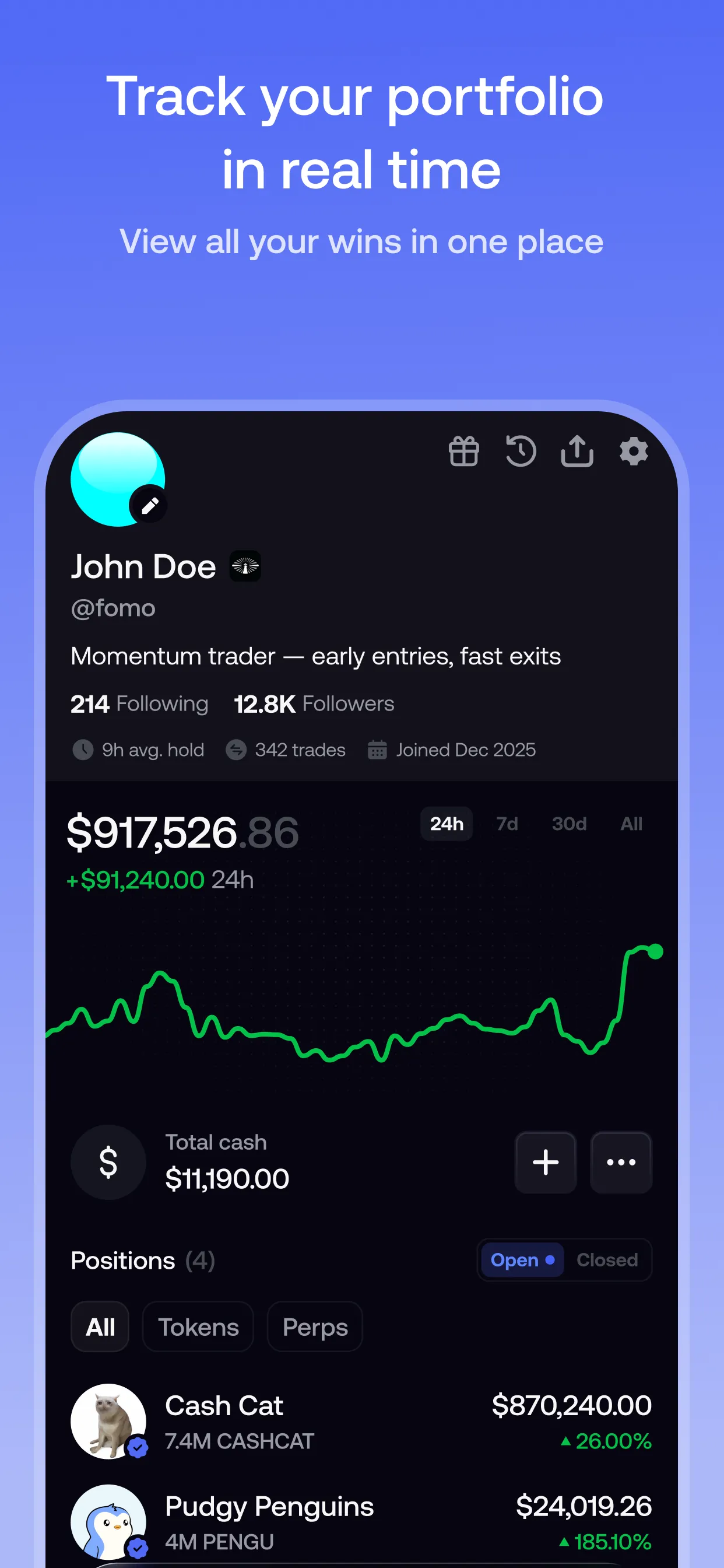
Track your positionsYour open and closed positions with profit and loss, in one place.
Which should you use?
Fomo vs Robinhood questions
Can I buy memecoins on Robinhood?
Only the ones Robinhood lists, such as DOGE and SHIB. New tokens launched on-chain aren't available until Robinhood lists them, if ever. Fomo trades tokens directly on its eight chains, including new launches.
Is Robinhood cheaper than Fomo for crypto?
For listed coins, Robinhood's default routing charges no commission; it's paid through market-maker rebates in the quoted price. Fomo charges 0.50%, or 0.45% with a referral code, and 0.05% on select major tokens. For tokens Robinhood doesn't list, there's no comparison: you can only buy them on-chain.
Does Fomo work in the US?
Yes, for spot trading, and US accounts can withdraw to a bank. Fomo's perps aren't available to US persons.
Is Robinhood Crypto available outside the US?
Robinhood runs crypto in some other regions, with different products and fees. This comparison covers its US offering, which requires a US address and a Social Security number.
What is Robinhood Chain?
Robinhood's own Layer 2 blockchain, built on Arbitrum's technology, for tokenized assets such as its Stock Tokens, which aren't available in the US. Fomo trades tokens on Robinhood Chain and accepts USDG deposits on it.
Can I move crypto from Robinhood to Fomo?
Robinhood lets you send crypto out, with network fees. Fomo accepts USDC on Solana, Base, BNB Chain, Monad and Ethereum, and USDG on Robinhood Chain. Check the network on both sides before sending.
What changed on this page
- : Fomo now supports eight chains and accepts a code until your first trade.
Sources (20)
- Trading fees on fomo · Fomo Help Center, updated 9 Nov 2026
- How referral codes and fee discounts work · Fomo Help Center, updated 10 Nov 2026
- Supported chains · Fomo Help Center, updated 9 Nov 2026
- Where is fomo available · Fomo Help Center, updated 3 Nov 2026
- Creating your fomo account · Fomo Help Center, updated 9 Nov 2026
- How to deposit funds · Fomo Help Center, updated 3 Nov 2026
- Withdrawing to your bank account · Fomo Help Center, updated 3 Nov 2026
- How fomo keeps your crypto secure · Fomo Help Center, updated 3 Nov 2026
- What is a private key and how to protect it · Fomo Help Center, updated 9 Nov 2026
- The social feed · Fomo Help Center, updated 23 Apr 2026
- Posting a thesis · Fomo Help Center, updated 8 Oct 2026
- Leaderboard · Fomo Help Center, updated 8 Oct 2026
- How tokens are labeled and verified on fomo · Fomo Help Center, updated 19 May 2026
- What Perpetual Futures Are on fomo · Fomo Help Center, updated 12 Nov 2026
- Perpetuals, now on fomo · Fomo blog, updated 11 Jun 2026
- Crypto · robinhood.com
- Rhc fee schedule · cdn.robinhood.com
- Social · robinhood.com
- Chain · robinhood.com
- Wallet · robinhood.com
Checked against these sources on 18 Oct 2026. Apps change their features, fees and policies; the live app is the final word.